March Madness, models, and math
Why do we need statistics, when even a math whiz can’t make perfect predictions?

It’s the time of year when many of us are lured by a beloved sport (basketball) into the region of an often-hated discipline (statistics). As many as 100 million people submit a March Madness bracket each year, yet in the decades-long history of the modern version of the tournament, a bracket that correctly predicted every win and loss has never been verified. Why is it so difficult to predict the outcome of this competition, populated with known and followed teams? What can that tell us about statistics and how it does (and doesn’t) reflect our real-life experiences?
Cinderellas vs. Statistics
Each year, fans of basketball and bragging rights alike are confronted with a set of daunting decisions: 63 blank spaces, with each corresponding to the winner of each game in the NCAA men’s basketball tournament. As college athletes try to win their way to a national championship, everyone else can shoot their shot at creating the elusive perfect bracket—or at least come the closest.
The total number of possible March Madness brackets, 9.2 quintillion, is a bit hard to comprehend. To put this in perspective, 9.2 quintillion seconds make up 292 billion years, over 20 times longer than the approximate age of the universe. Fortunately, the odds of picking a successful bracket get a lot better with a good strategy and some prior knowledge of basketball. Better is relative: these assists bring us to a whopping 1 in 120 billion chance of perfection.
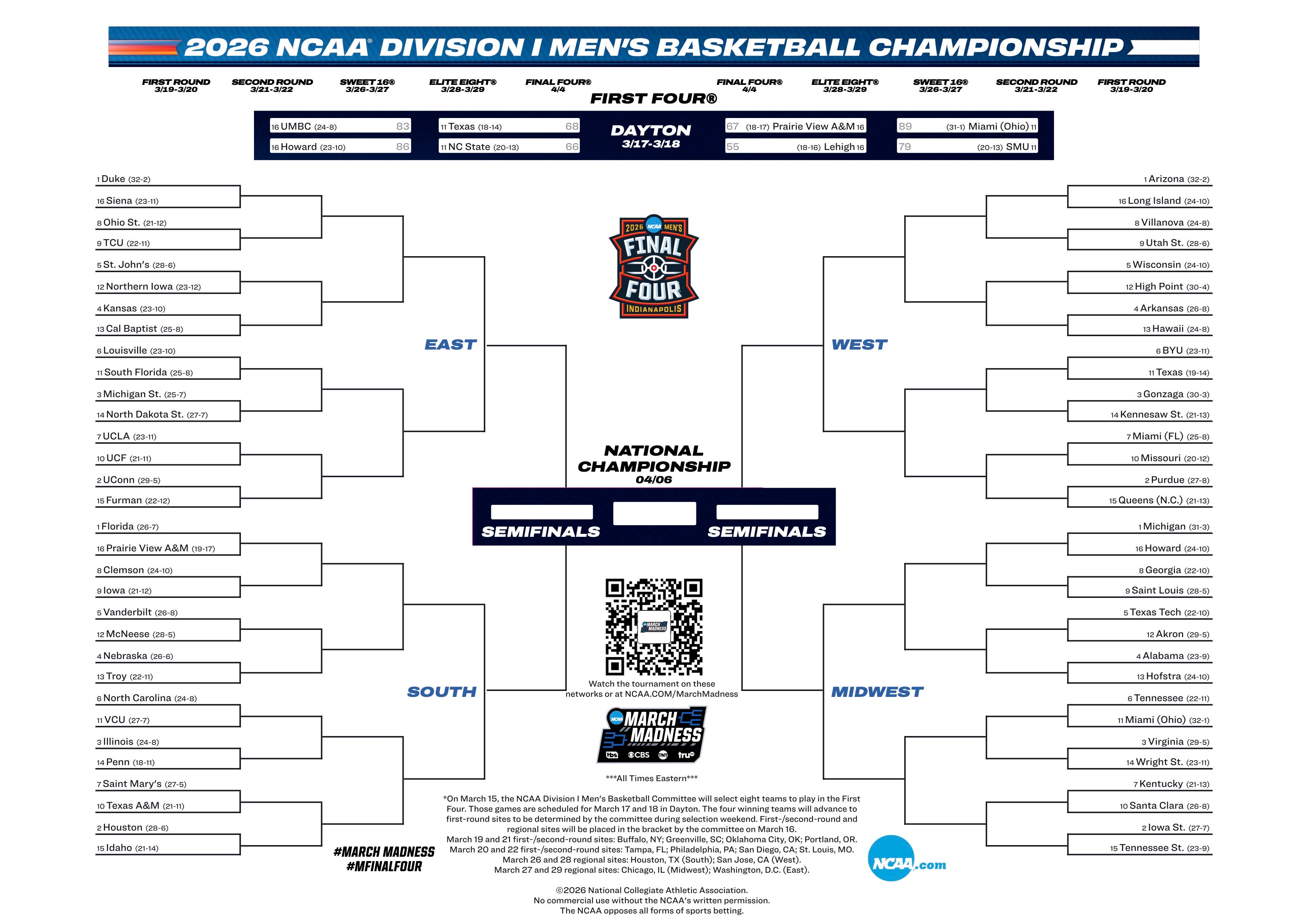
In 2026, expert opinions, advanced prediction algorithms, and in-depth “bracketology” breakdowns make it easier than ever to make informed March Madness decisions. Beyond looking at national rankings and tournament seeding (1 to 16 in each quadrant), online bracket selection platforms also provide myriad comparative statistics for each matchup. But extra knowledge and data still don’t prevent Cinderella teams popping up to bust some brackets—like the historic Elite 8 run of St. Peter’s University’s unranked, 15-seeded team in 2022—that may end up benefiting the bracket of a coworker who made their selections based on cutest team mascots.
Whether guided by data or gut instinct, there are many strategies for bracket selection, with varying levels of success from year to year. Let's look at some examples:
Prioritizing ranking: This conservative approach is also one of the most straightforward; just pick the better team on paper. Rankings are a great place to start making a bracket because they provide a more holistic view of a team than one metric could. In a perfect world, everything points to the higher-ranked teams winning. In reality, 2025 was one of the few years in recent memory that the four best teams on paper made it to the semifinals. Some examples of uncertain factors that could undermine this approach include the mental game associated with the high-pressure environment of March Madness, unexpected injuries to star players, or the partially subjective, sometimes inaccurate nature of rankings.
Follow the stats that speak to you: What makes a team good or bad? What makes a team successful in the tournament? When given countless stats, data, and opinions, which ones are most important to consider? Even in sports media, experts don’t always agree with each other. Maybe one person prioritizes a team who played stronger teams during the regular season, rather than just considering win to loss ratio. But when looking at wins and losses, should the overall record be valued, or are the last 10 games leading up to the tournament a better indicator late in the season? Are there certain metrics that are more valuable in tournament play than regular season? Whether a human or machine learning algorithm, there are many ways to interpret the data, and when there are so many confounding factors, it is difficult to identify which to hedge your bets on.
Embrace the madness: Choose your favorite team to win it all. Take 10 minutes to throw a bracket together based on vibes or gut-instinct. In the 2018 tournament, it seemed like all the teams wearing blue were winning. When the uncertainty is high and the upsets are flowing, having some fun and embracing the random can sometimes help your bracket rise to the top.
Because of the single-elimination nature of the tournament, the most carefully constructed bracket is vulnerable to upsets. Much has been written from the perspective of March Madness about why predictive statistics struggle with this situation, in which a great deal of information is known about a system but a chance event substantially alters the outcome. But what can these ideas teach us about statistics in science, and our feelings about scientific predictions?
Science vs. Serendipity
A core goal of science is not only to explain the world around us, but to empower us to make predictions about it. The more we learn about how a plant grows or how a disease progresses, the more we hope to be able to foresee—and then to facilitate or forestall—that process. In this goal we are both helped and hindered by the powerful but biased predictive powers of our own brains. We gather information and are quick to spot certain types of patterns, but are swayed by factors like differences of scale or the involvement of emotion. These biases in our intuition can be helpful when escaping a predator; they are less suited for drawing conclusions from systematically collected data.
For help with that task, we turn to statistics. This branch of math was developed to help us organize information that we gather and draw conclusions from it in an objective way. It helps distinguish randomness from patterns, and those patterns can enable us to make predictions.
Statistics typically helps us to draw general conclusions about a group or a population, in situations where we can’t gather information for every entity within the group. Imagine we wanted to know whether doing 20 jumping jacks every morning leads to a lower resting heart rate. If we simply find one person who does jumping jacks and another who does not, we can’t be sure whether differences in their heart rate are due to calisthenic habit or other chance factors. But as we look at more and more jumping and non-jumping individuals, any pattern that might truly be caused by the exercise of interest should get stronger, not weaker.
This power (that’s actually what it’s called!) of statistics is also linked to what can make its conclusions feel unsatisfying. When we read up on a medical condition, view the weather forecast, or study a basketball team’s ranking, we are taking in a general conclusion based on the average of many patient outcomes, past weather events, or games throughout a season. These conclusions can give us odds, but we don’t usually experience our lives in odds. What we remember is what actually happens to us, the individual. Severe weather happened in our town, or it didn’t. The team we follow won in the Round of 16, or they lost.
In March Madness, the temptation to beat the odds keeps pulling fans back in for another try. There is a peculiar attraction to a longshot, and most people love the kind of underdog story that Cinderellas provide. If we built a tournament like a scientific study, we would ask teams to play each other over and over until their true skill levels drowned out fickle chance, and we could write perfect brackets; a version of the NCAA tournament with higher statistical power would more closely resemble the NBA and WBA playoffs, which require a team to win 4 out of 7 games in a match up. But in the end, it isn’t science—it’s sports. And the tournament wouldn’t be “March Madness” without the promise and thrill of uncertainty.

Parting thoughts
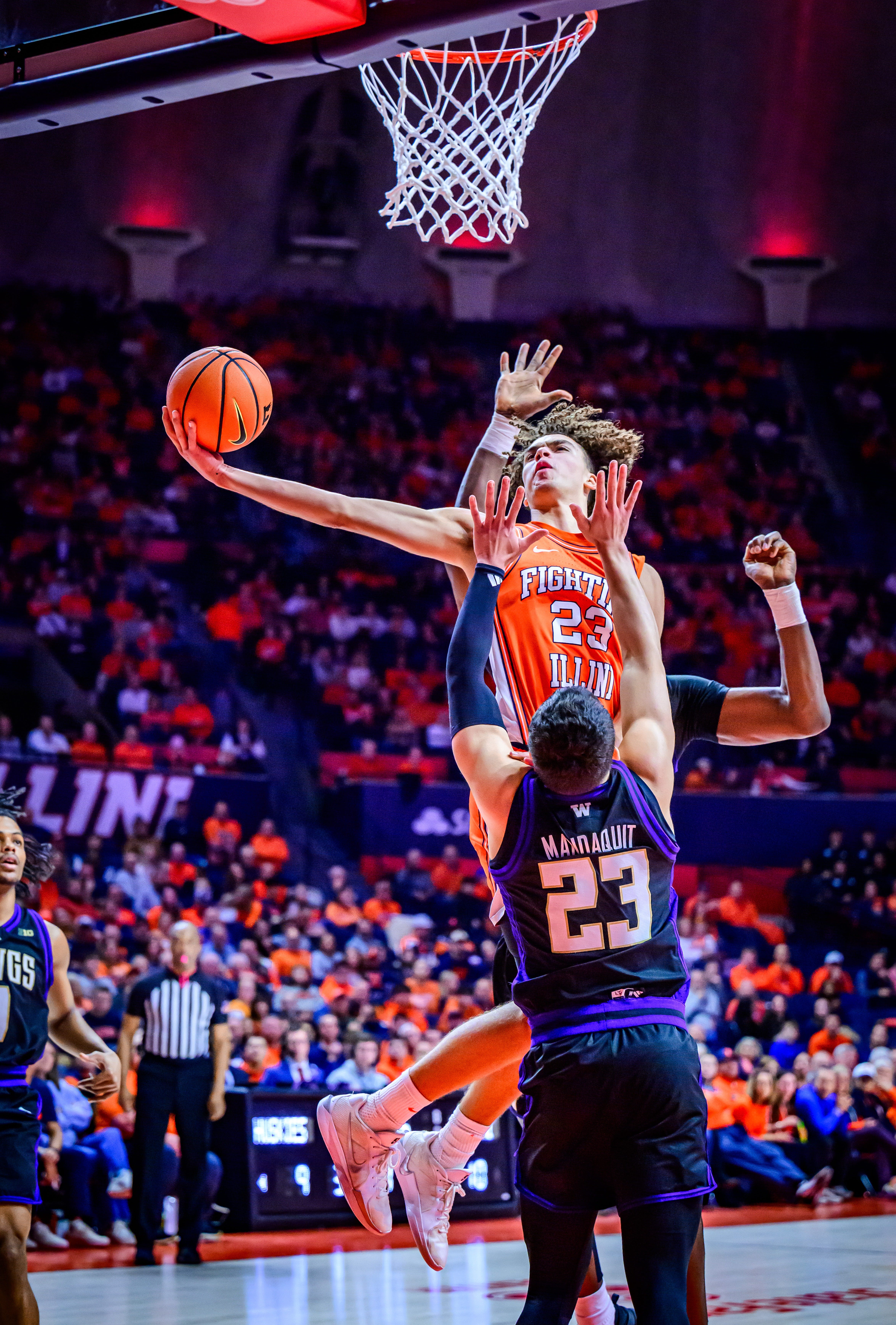
While we aim to remain unbiased and defer to statistics in our scientific endeavors, we are not immune from the pull of sports fandom. Here at the University of Illinois Urbana-Champaign, we will be cheering on the Fighting Illini tonight in their first game! ILL!
If you are a basketball fan and missed your chance at the men’s tournament, there’s still time to make your picks before the women’s tournament starts tomorrow. If you, like a few others on our team, don’t know or care much about basketball, you can read up on the annual March Mammal Madness! It’s too late to submit a bracket for this year, but you can still enjoy the results and learn a lot about our close animal relatives: https://libguides.asu.edu/MarchMammalMadness.