Appreciating graduate students
The hidden force of an unglamorous role
Scientific discovery has shaped modern life, helping us to understand the world we live in and enabling the technology and infrastructure we use every day. Who are the people behind these discoveries? History often tells us stories about the monastic scientist: an inquisitive, but isolated, genius, deeply committed to exploring their scientific curiosities.
In school, we learn the names of historical scientists—Galileo Galilei, Isaac Newton, Albert Einstein, Marie Curie, Alexander Flemming, and Charles Darwin, to name a few—whose scientific impact is still evident. Today, modern scientists are still pushing the boundaries of research, but the typical structure of a research team looks quite different now. What once was perceived as an endeavor of lone scientists has transformed into a large, collaborative landscape. At its foundation are hundreds of thousands of graduate students who drive research and innovation.
Like campuses across the country, the University of Illinois Urbana-Champaign spent the last few days celebrating Graduate Student Appreciation Week. In honor of that annual time of recognition, we are highlighting the work of graduate students, whose contributions to scientific research often go unseen, in today’s post.
What does it mean to be a graduate student?
You may be wondering why graduate students need an appreciation week; aren’t they just students paying tuition and earning their degree? In some ways, yes. Upon graduation, these students receive their master’s or doctoral diploma. But for most graduate students in scientific fields, the label “student” doesn’t fully capture the nature of their role in research. As a graduate student, it can be a bit hard to explain to friends and family how you are still in school after five years, haven’t taken a class in three, and still don’t have a graduation date.
Graduate students are a cornerstone of academic institutions, comprising a majority of the research labor at universities across the world. Many, if not all, scientific discoveries and advancements made in the past fifty years are thanks in no small part to them.
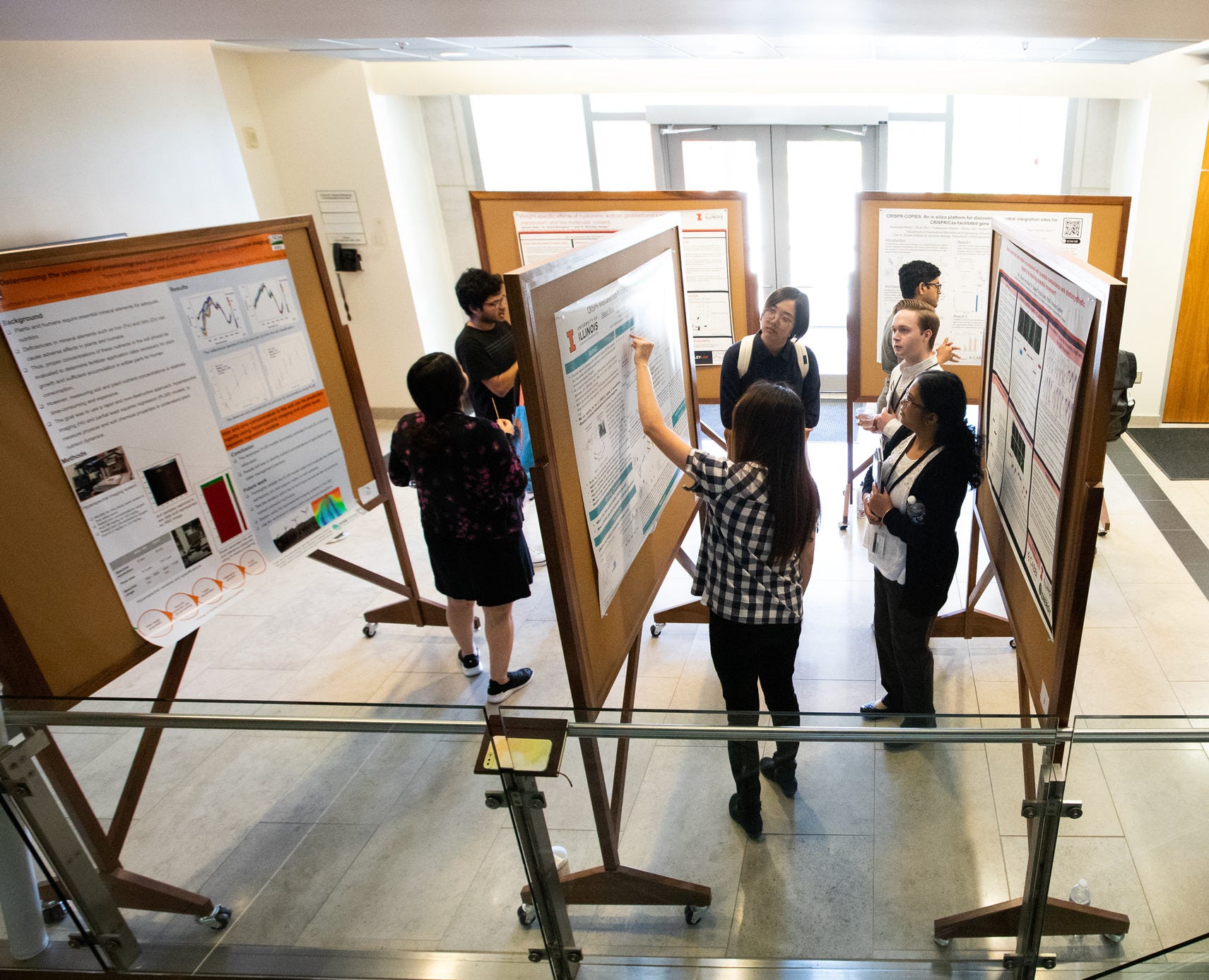
This is due to how the structure of scientific research has changed over the years. Historically, scientific training resembled a master-apprentice model, in which a trainee works closely with their mentor through hands-on approaches to gain the knowledge and skills. In the modern structure, many prominent scientists eventually leave behind their hands-on practice after training, shifting their focus to leading teams that work within their particular area of expertise. In this capacity, these scientists—often professors at universities—tend to function as thought-leaders and project managers, while graduate students and other research scientists work in the lab and train younger members in hands-on skills.
As a result of this structure, the variety of tasks that graduate students may be responsible for has expanded: asking research questions, running technical experiments, analyzing data, doing chores to maintain the lab space, and mentoring younger students, among others. On top of this, graduate students often contribute to the larger teaching structure of the university, functioning as instructors who run undergraduate classes and lab courses. In one semester, a graduate student can be taking classes and teaching an undergraduate course, while also working full time on their thesis research.
The work of graduate students often goes unseen, hidden behind the names of the accomplished scientists they are working with. But these students are a driving force of innovation. One example of this type of hidden impact is the work of Carol Greider, now a professor at the University of California, Santa Cruz, who made an important discovery when she was a graduate student in 1984.
From research nobody to the Nobel Prize
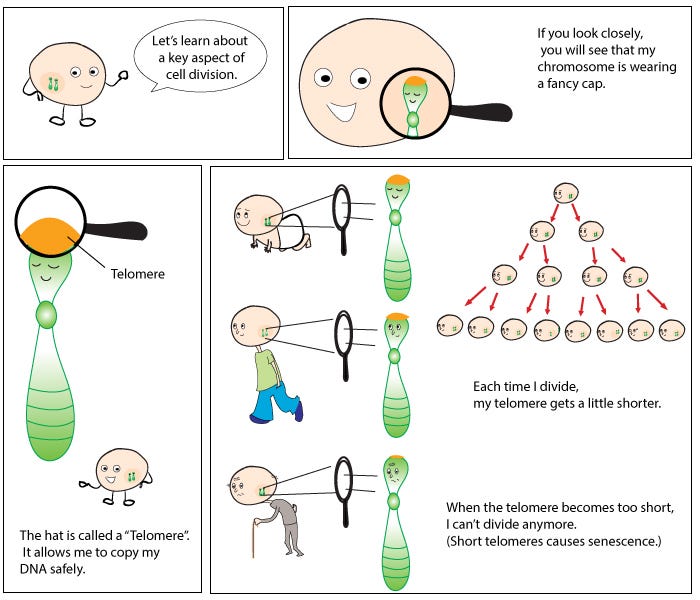
In 2009, Carol Greider won the Nobel Prize in Physiology or Medicine, along with Elizabeth Blackburn and Jack Szostak, for the discovery of telomerase. This enzyme, made of protein and RNA, adds pieces of repeating DNA sequence to the ends of chromosomes to preserve them from breaking down over time. These ends are called telomeres, which are critical to protect the ends of chromosomes from losing important genetic code as cells duplicate and bodies age.

Carol Greider earned her PhD from the University of California, Berkeley in 1987, where she worked in Professor Elizabeth Blackburn’s research group. In her Nobel Prize biographical, Greider shares her journey to receiving the prize. This piece lends an inside view into her experience as a graduate student researcher at the time of telomerase’s discovery.
Prior to Greider’s arrival at Berkeley, Blackburn’s group had already reported the structure of the telomeres capping the ends of DNA, like plastic aglets on ends of shoelaces. But they still didn’t know how telomeres maintained their length during the DNA replication. Based on this process works, they would expect the telomeres to shorten over time, as this is the whole reason they are there to begin with—to prevent the actual genes from being damaged. Greider took this research question on when she joined Blackburn’s group; she searched for this answer in Tetrahymena, a single-celled organism. This “pond scum” has a large number of telomeres which made it a great place to start looking for a hypothetical enzyme that could add extra length. After laboring away in the lab for nine months, she found the first evidence of an enzyme, soon named telomerase, on Christmas Day in 1984.
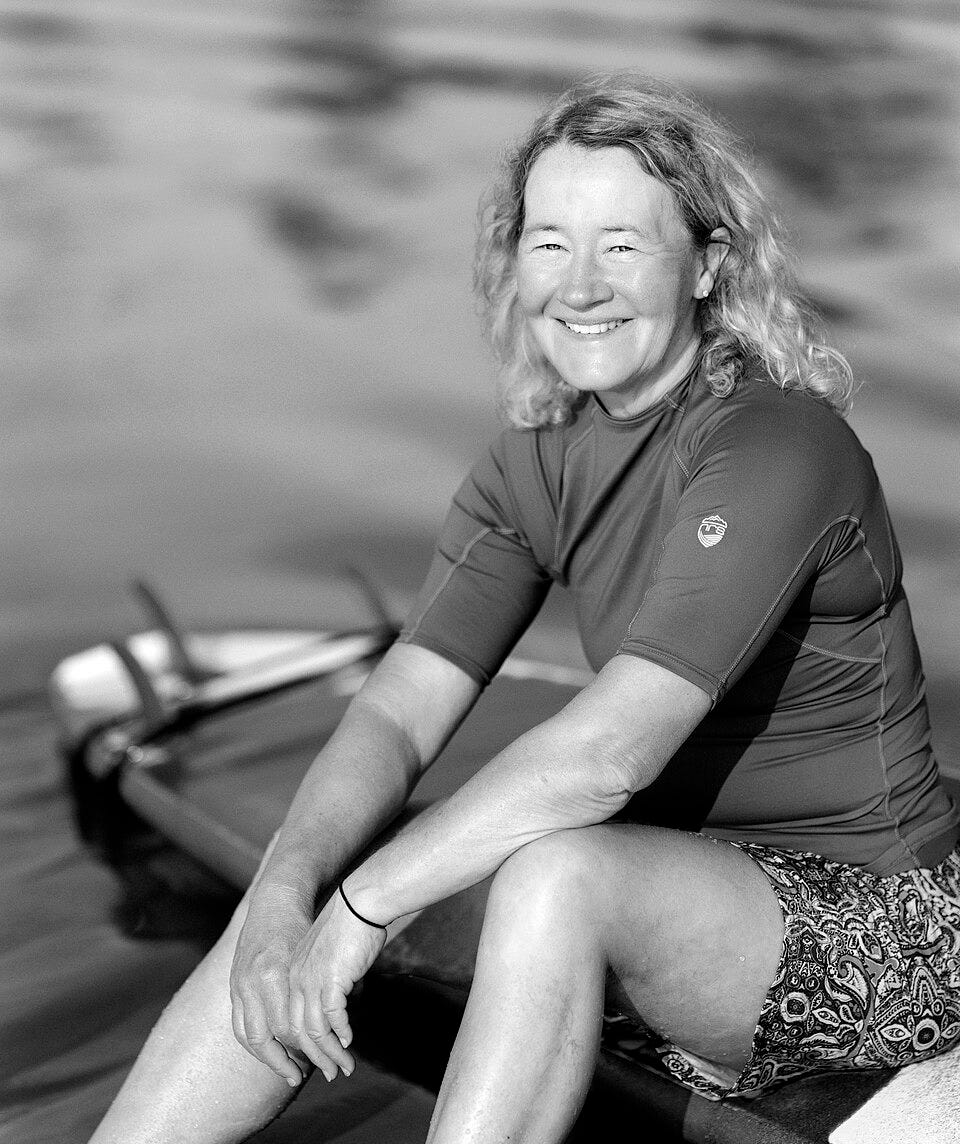

Growing up as the daughter of two academics, Greider had never expected or planned to be a scientist. She struggled in school, having to find creative ways to overcome learning difficulties associated with dyslexia. But like many accomplished scientists before her, Greider followed her curiosities; a high school interest in biology, gained from an enthusiastic teacher, led her through numerous undergraduate research labs in different scientific fields, and then eventually to her telomere research in Blackburn’s group. By the time she was 23, Greider discovered telomerase, the breakthrough that would earn her the Nobel Prize 25 years later. Maybe more importantly, the discovery helped build the groundwork for important medical research into cancer and aging. Since graduate school, Greider has continued her research in this field, as her story continues to highlight the vital role of graduate students in shaping the scientific knowledge of our world.
Parting thoughts
Here at the IGB, our research institute wouldn’t be what it is today without graduate students. You can learn about some of their stories in these past IGB profiles: